
Category: who made my clothes?
New garment factory doc: Machines
Watch out for this new film coming to UK cinemas in 2017.
Moving through the corridors and bowels of an enormous and disorientating structure, the camera takes the viewer on a descent down to a dehumanized place of physical labor and intense hardship. This gigantic textile factory in Gujarat, India might just as well be the decorum for a 21st century Dante’s Inferno. In his mind-provoking yet intimate portrayal, director Rahul Jain observes the life of the workers, the suffering and the environment they can hardly escape from. With strong visual language, memorable images and carefully selected interviews of the workers themselves, Jain tells a story of inequality, oppression and the huge divide between rich, poor and the perspectives of both (source).
Reviews and interviews
#whomademyclothes? Fazlul Ashraf?
A week ago PhD student Thomas Dekeyser tweeted a photograph of a note found in someone’s Zara jeans. We circulated it at work, and loads of people discussed what language it might be written in and what it could say. We’d found a note on a CD player and found help to translate it before.
There’s a genre of shop-dropping in which factory workers leave notes for consumers in the things they make. Sometimes they’re genuine. Sometimes they’re hoaxes. Sometimes they’re part of activist campaigns. See our post The 13 best examples of shop-dropping … ever for more.
This one was particularly relevant for the Fashion Revolution movement, whose core question is ‘Who made my clothes?’ This note could simply be a direct answer. According to Reddit. Or is there more to it?
Thanks to Thomas and to Brad Garrett for the tipoff.
Buy this shirt… #worldfactory
We’ve been following this project on social media for a while now. Today we bought the shirt…
Part research method, part art object, The Shirt is a specifically designed consumer item, manufactured in a Chinese factory, which uses bespoke digital technology to make visible all the people and processes behind its production. The Shirt has barcodes on it, and when you put your smartphone over the barcode, using a bespoke app, it will trigger digital content that reveals the very people and processes involved in making the actual shirt in your hands.
Buy your shirt here. £35 plus shipping… Find out more here. Continue reading
Our Arts & Activism Symposium @exetergeography today
Today is an exciting day in the university module that powers our website. It’s our annual Arts and Activism Symposium, funded and hosted by the Department of Geography at the University of Exeter. Here’s the line-up and some background info on the projects our speakers will be talking about. After this, our students develop their own commodity activist work.
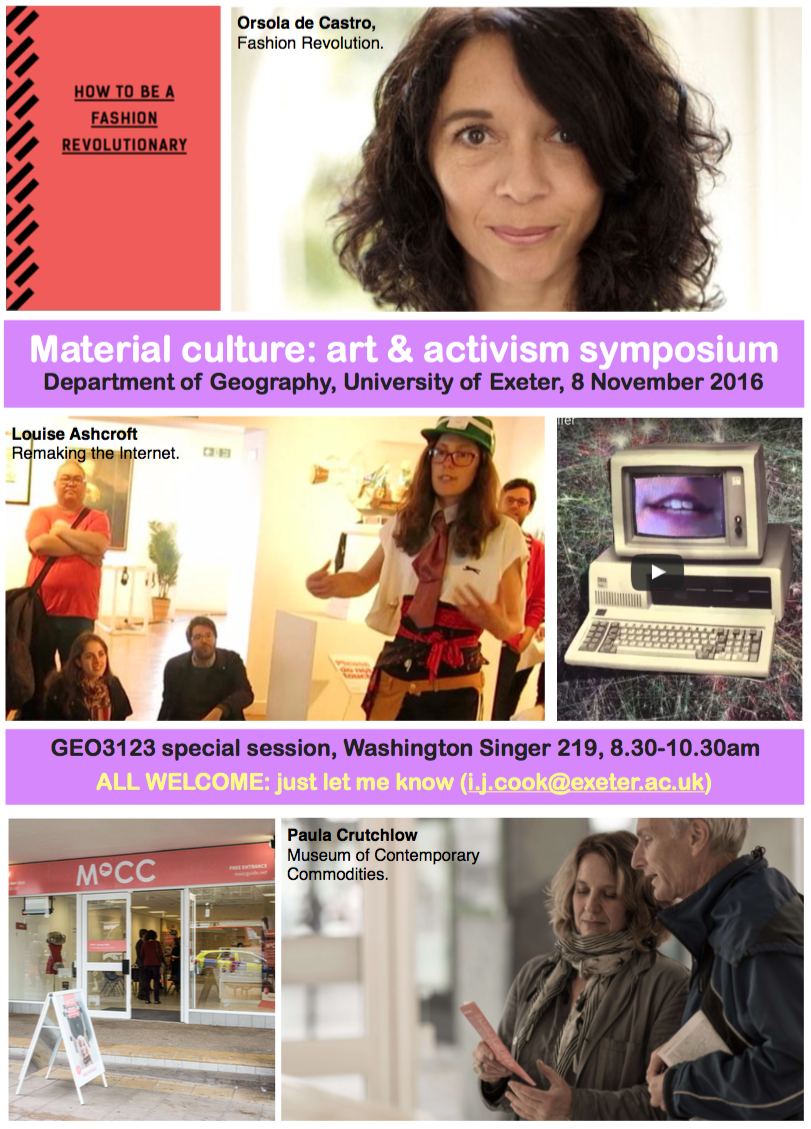 1) Orsola de Castro: watch this
Fashion Revolution sessions at the RGS(IBG) conference next week
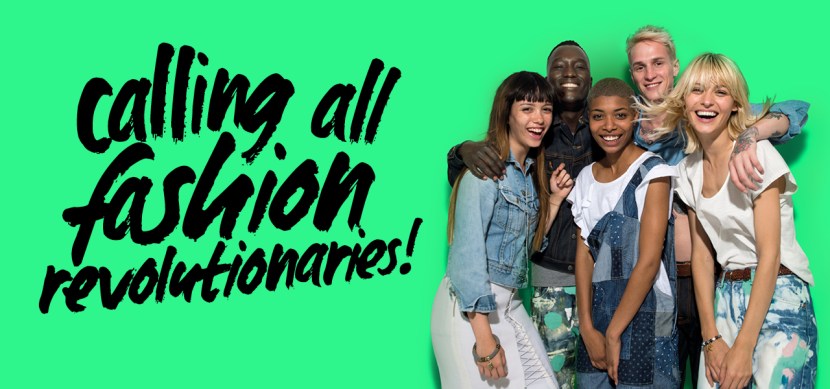
We’ve organised three sessions on ‘Scholar Activism and the Fashion Revolution: who made my clothes?’ at the Royal Geographical Society (with the Institute of British Geographers) conference in London next week. We are excited to bring together scholars from many countries and disciplines and key members of Fashion Revolution’s Global Coordination Team. Everything takes place on Thursday 1st September. Here’s the line-up (click the session titles for the full details):
Session 1: ‘connecting producers and consumers’
Chair: Ian Cook, Geography, University of Exeter
Rebecca Collins, Geography and International Development, University of Chester: New-Old Jeans or Old-New Jeans? Unpicking perverse, provocative and paradoxical temporalities in young people’s clothing consumption.
Do ‘follow the thing’ documentaries affect their audiences?
This is one of the questions that drives our work at followthethings.com. We tend to find our answers – yes, no, maybe, depends, etc… – in the user-generated comments on video-sharing websites like YouTube and in the comments on newspaper reviews. We’re currently wading through thousands of comments on a 2015 ‘follow the fashion’ film called The True Cost, and came across this powerful video response. We’re giving a paper about the True Cost and fashion activism at a conference next month. There’s an argument in the literature that work like this makes prescriptive arguments about responsibility that are so infinitely demanding they can generate a sense of powerlessness in consumer audiences. This doesn’t seem to be the case, at least for this viewer. Watching this film was a powerful experience. For us, this kind of response changes the question that’s asked. Now it’s ‘how do ‘follow the things’ documentaries affect their audiences? What vocabulary can we develop to describe this? That’s what we’re working on.
New on followthethings.com: the 2 Euro T-shirt: a social experiment
It’s Fashion Revolution Week this week. Last year’s headline, viral #whomademyclothes smash came from Germany. A vending machine apparently dispensing t-shirts for only 2 Euros in a Berlin square. If you put your money in, you had to watch a video showing the sweatshop conditions in which they were made. Twenty seconds in, you were presented with an option to buy the t-shirt or donate your 2 Euros. You were also filmed. With your permission, your reactions were included in a short film that was posted on YouTube on 23 April 2015. To date, over 7 million people will have seen your reactions, the expressions on your face, and joined the often heated, occasionally funny and carefully reasoned conversation in the comments below, and elsewhere online.
At followthethings.com, we turn the thousands of comments all over the internet into a digested read, a single conversation. Reading this you might get a sense of how successful this experiment was, and what made the video go viral. You might also think what you might have added to the conversation. What is the experiment showing? What’s it not showing? See what you think. Here.
Highlights from the conversation: Continue reading
Fashion Revolution call for papers at RGS(IBG) annual conference
We’re involved in running a session at the Royal Geographical Society (Institute of British Geography) annual conference this summer whose aim is to bring academic fashion experts into dialogue with the Fashion Revolution movement. We’re asking how fashion research can contribute to what is becoming a worldwide movement for a more ethical / sustainable fashion industry in the wake of the Rana Plaza factory collapse in April 2013. We’re looking for academic research from any discipline that can contribute to Fashion Revolution’s five year planning. Here’s what we’re doing. Please get in touch with Ian, Lousie and/or Alex to discuss any ideas. The deadline for abstracts is Friday 12th February.
– Call for papers –
Scholar activism and the Fashion Revolution: ‘who made my clothes?’

Abstract
The collapse of the Rana Plaza factory complex on April 24th 2013, which crushed to death over 1,000 people making clothes for Western brands, was a final straw, a call to arms, for significant change in the fashion industry. Since then, tens of thousands of people have taken to social media, to the streets, to their schools and halls of government to uncover the lives hidden in the clothes we wear. Businesses, consumers, governments, academics, NGOS and others working towards a safer, cleaner and more just future for the fashion industry have been galvanised.
Fashion Revolution Day 2015 in Schools & Universities: a roundup
Here are some of the many ways in which young people around the world were curious, found out and did something for Fashion Revolution Day this year. We’re now collecting and sharing ideas for 2015-6. Please get in touch with education@fashionrevolution.org with actions and advice that we’ve missed. #whomademyclothes
“Who made my school uniform?’: how to engage primary students in Fashion Revolution Day
It was Fashion Revolution Day last Friday, the second anniversary of the collapse of the Rana Plaza factory complex in Dhaka, Bangladesh in which 1,129 people died making clothes for High Street brands. This year, we helped to create education packs for the global campaign, hoping to finds ways in which teachers and students of all ages could interrogate (un)ethical and (un)sustainable fashion by asking ‘who made my clothes?’ We have written about Fashion Revolution Day’s approach to teaching controversial issues here. Below, however, we showcase a blog post by Professor Becky Earley on the ‘Who made my uniform?’ project she worked on at her childrens’ primary school in London. We think this is fantastic. Here’s an extract.
#insideout St Mary’s pupils traced their uniform to china, India, Bangladesh, Vietnam and Tunisia, & prayed for RanaP pic.twitter.com/N8dK0kFkf0 — Prof Becky Earley (@rlearley) April 24, 2014
“… My son loves trainers. He’s a football fan and player, and the influence of the Arsenal team and their colorful attire – and what is donned by his group of friends at school and on his team at the local sports centre – is significant to him. He got the trainers he wanted for Christmas – bright orange. They looked amazing with his lime green away kit. Yet within days he starting asking for another pair, in a different colour. I took the opportunity to explain to him again about why ‘stuff’ is special. The materials, dyes, labour, shipping… all comes at a cost, and not just to the bank of mum and dad. At 8, he knows all this already. We talk about ‘stuff’ all the time. But he just can’t make the leap to applying this knowledge to his insatiable desire to be part of the team – to look the part. At his school the lost property area is a mess of unlabelled and unloved green, white and navy cotton and polyester. I decided to start here with my research, and look at the way in which primary school children relate to their uniform – their everyday clothes. The deputy head at St Mary’s Catholic Primary School in Chiswick and I hatched a plan to run a ‘Who Made My Uniform’ project, in response to the FRD provocation ‘Who Made My Clothes?’ Beginning with a carefully prepared school assembly on the actual day, the project consisted of a week-long residency by myself with the help of another mum, and a series of class projects run by the teachers. The photo story below documents the project. Over the summer term we asked:
- Where was my uniform made?
- Who made my uniform?
- What is it made from?
- How can I make my own clothes?
More blog posts like this
How to explain Fashion Revolution Day to the kids
Encouraging children to ask ‘Who Made My Clothes?’
Fashion Revolution Day – raising awareness in the classroom (in Spanish)
 the back office