
Category: Appreciation
New on followthethings.com: the 2 Euro T-shirt: a social experiment
It’s Fashion Revolution Week this week. Last year’s headline, viral #whomademyclothes smash came from Germany. A vending machine apparently dispensing t-shirts for only 2 Euros in a Berlin square. If you put your money in, you had to watch a video showing the sweatshop conditions in which they were made. Twenty seconds in, you were presented with an option to buy the t-shirt or donate your 2 Euros. You were also filmed. With your permission, your reactions were included in a short film that was posted on YouTube on 23 April 2015. To date, over 7 million people will have seen your reactions, the expressions on your face, and joined the often heated, occasionally funny and carefully reasoned conversation in the comments below, and elsewhere online.
At followthethings.com, we turn the thousands of comments all over the internet into a digested read, a single conversation. Reading this you might get a sense of how successful this experiment was, and what made the video go viral. You might also think what you might have added to the conversation. What is the experiment showing? What’s it not showing? See what you think. Here.
Highlights from the conversation: Continue reading
Possibly the most coherent explanation for ‘follow the thing’ research Ian has ever offered!
Our CEO Ian Cook gave a talk about followthethings.com at an ‘Interdisciplinary Perspectives in Consumption Ethics’ seminar at the University of Leicester in June 2015. Afterwards, the speakers were asked to sit down and explain to camera how they had become interested in ‘ethical consumption’ as researchers. This is what he said…
Ian thanks Dierdre Shaw, Helen Gorowek and Andreas Chatzidakis for inviting him to present, Juliet Schor, Marylyn Carrigan and Caroline Moraes for their great talks, and Andreas for his at-ease interviewing skills.
Where does Isis get its money and weapons from?
In the UK’s discussions this week about appropriate responses to Isis/Daesh questions have been asked not only about bombing and ground troops, but also about supply lines of weapons, money and people. A brief examination of news reporting on these issues suggest that a ‘follow the things’ approach to understanding and combatting Isis/Daesh has been emerging over the past year. We’re using this post to begin to piece its elements together. Follow the links to flesh out the stories.
Corbyn’s questions
“[UK Labour Party leader] Jeremy Corbyn posed a series of rhetorical questions when asked whether bombing Isis following the Paris terror attacks would make a significant difference to the situation. In an interview with Lorraine Kelly on ITV, [he] answered “probably not”, adding: “Who is funding Isis? Who is arming Turkey? Who is providing safe havens for ISIS? You have to ask questions about the arms everyone has sold in the region. … So where does Isis get its money, guns and bombs, both in Europe and in the Middle East?” (Brooks-Pollock 2015 np link). Continue reading
This costs more than 5p: the life story of a plastic bag.
On the day that shoppers in England start to pay for plastic bags, let’s watch this film which “traces the epic, existential journey of a plastic bag (voiced by Werner Herzog) searching for its lost maker, the woman who took it home from the store and eventually discarded it. Along the way, it encounters strange creatures, experiences love in the sky, grieves the loss of its beloved maker, and tries to grasp its purpose in the world.”
How to run a subvertisement workshop
One of our former interns, Eeva Kemppainen, now works in Helsinki for the pro-Fair Trade NGO Eettisen kaupan puolesta (Pro Ethical Trade Finland). In 2014, she published a paper in the Finnish journal Natura about ways in which she tries to engage students in humorous critiques of consumption and advertising. They examine, then cut up, rearrange and/or scribble on magazine adverts. They try to subvert their messages so that the information that they hide is made visible. What they produce are what’s called subvertisments. Here Eeva describes how she organises subvertisement workshops, and showcases some of the work that students have produced.

Figure 1: An example of a student-produced subvertisment: rearranging kids in an H&M advert to show connections between who makes and wears their clothes

Where presents come from…
Dear followthethings.com shopper
Christmas is the busiest time of year for global capitalism. It’s also the best time of year to ask ‘who made my stuff’? Or, better, ‘who made the stuff I’m going to buy for my friends and family’? And ‘who made the gifts they’re going to gove to me’? There’s lots to think about.
We have been putting together a Christmas ‘shopping’ list for over a decade and it’s full of fascinating information and thought-provoking stories with which to teach and learn about this time of year. Watch some classic Christmas movies. Read some shopping guides, supply chain news, and perspectives on the season from NGOs, artists and academics.
How to think critically about and with Christmas? We have some ideas
Festive feelings
Ian et al.
[last updated December 2025]
Our Christmas movies
A short to warm up your audience:
Tesco pulls Christmas cards reportedly made by ‘Chinese prison slaves’ (2019)
or
Xmas Unwrapped (2014)
Where’s this from? See our page in this film here.
Continue readingGuest blog: follow the poppies
Our latest guest blog is by Joe Thorogood, a former student in the ‘Geographies of material culture’ module at Exeter University who is in the early stages of a ‘follow the things’ PhD in the Department of Geography at University College London. His research is on poppies. In the post below, he outlines what he’s found out so far about the Remembrance Day variety. As usual with following research, you may be surprised by what he finds.
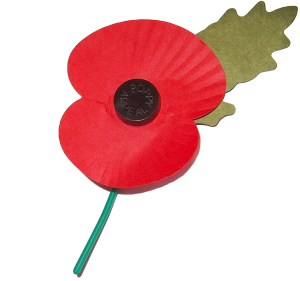
Royal British Legion poppy: click for source
The Remembrance poppy is a symbol of memorial. In the couple of weeks before November 11th – Remembrance Day – these poppies are available in exchange for a charitable donation to the Royal British Legion, a UK charity that provides services for ex-military personnel and their dependents. It is worn in the UK in memory of service personnel who died in the First World War and in wars since then. It’s a symbol for personal grief and reflection, but also of national loss. Many countries have poppies shipped out to expatriates and families who have relatives who fought on behalf of the British Empire and British army in campaigns abroad.
I’m researching Remembrance poppies for my PhD, using a methodology that studies the lives and issues that are connected through their travels and transformations as things.
It wasn’t hard to find out about how and where Remembrance poppies are made. You could do it yourself by simply visiting the Poppy Factory in Richmond, Surrey, where they make about 500,000 of the poppies the public wear. Ex-service personnel and their dependents are crucial to this effort, as they often work in the factory or are supported by factory to find employment after leaving the armed forces. Continue reading
Who made my stuff? Look for the letters!
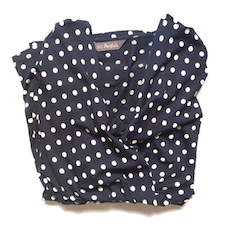
2014 labels & letter in clothes
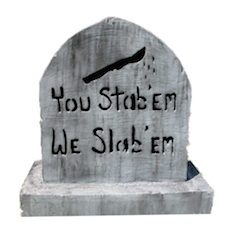
2013 letter in decorations

2012 letter in Saks bag

2014 shop-dropping post
Next week: we’re in a shopping centre talking clothes
We’ve been working on one of 12 ‘Grand Challenges’ that the University of Exeter runs each year for first year students. The idea is that academic staff introduce first year students from across the university to the Grand Challenges of the 21st Century, through some hands-on learning and with the help of visiting experts (who students refer to as ‘real people’, in my experience).
Challenges this year include Climate Change, Global Security and Mental Health, and the one that we’re running is on Fashion ethics after the Rana Plaza collapse.
There are four ways to find out more, to get involved, and to follow us next week:
1) Our blog
All the background information we’ve put together to prepare for this challenge. The Rana Plaza collapse and its ripple effects, and how we’re trying to appreciate and work with these ripples in the space of Exeter’s Guildhall Shopping centre, where we’re be occupying 2 disused shops and its main square for 4 days next week.
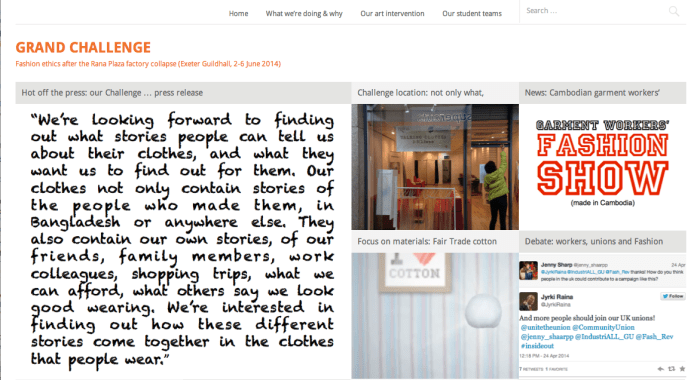
Click image for blog

Who made Carry’s Pringle dress? We get close…
At the Fashion Revolution Day advisory board meeting last month, we made the rash claim that we could find out (roughy) who made your clothes, through the kind of ‘Follow it yourself’ research that we do. We decided to take as our starting point a tweet by FRD’s founder Carry Somers.
 the back office