
Category: globalisation
Our 2nd #followtheteachers blog post

Over the course of the 2013-4 academic year, we’re following seven school teachers and they use and adapt followthething.com in their classrooms in England. Our second post is by Natalie Batten. She reflects on how she encouraged her students to use our site last year to help compare and contrast multinational corporations. This year, she will be using one of our new game-based teaching resources to encourage her students to better appreciate corporations’ diverse policies regarding workers’ rights and monitoring.

I covered a similar topic to the one discussed in Oprah’s #followtheteachers blog post – that of globalisation and multinational companies. This scheme, however, was implemented for AS Level Geography students (studying the OCR exam syllabus). This highlights the versatility of followthethings.com site as a resource for a variety of student ages, even when covering the same topic area. For example, while Oprah used the site to introduce globalisation at Year 7, I used it at A level to consolidate pupils’ prior learning and provide them with examples and case studies for their exams.
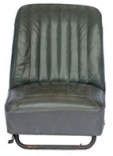
Click the seat!
The pupils were not familiar with the site, so time was incorporated into the scheme of work for them to explore it. They really liked the layout and navigation of the site and its recognisable format – like other online stores such as Amazon – which made the site personal to them and their interests.
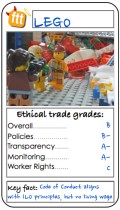
Click to play!
The different forms of data presentation on the site (eg. film reviews, travel journals, newspaper articles and Lego re-creations) provided opportunities for differentiation with more able pupils challenging themselves through interpretation of more abstract research sources. In particular, some used the Ford Car Seat page – based on a 2006 film called ‘Made in Dagenham’ – to explore social and historical geographical topics such as feminism and women’s rights. This was important as it allowed pupils to ‘find the geography’ and make synoptic links to other geographical topics during their MNC research task.
An extension to a task like this could be to incorporate followthethings.com’s new teaching resource – Ethical Trade Trump Cards as a way to compare and contrast global MNCs on categories such as worker’s rights, policies and monitoring in an exciting and familiar game for pupils.
Both they and myself as a trainee teacher took a lot of positives away from this activity and I will certainly be using followthethings.com in my future teaching for this and other topics.
More classroom resources to teach with followthethings.com

Today, we share two new classroom resources, developed with Alan Parkinson this summer. They have been developed primarily for school teachers in England and Wales (many of who share a new National Curriculum). BUT, they are also written for anyone, anywhere who is keen to teach and learn with followthething.com!
The first is a 9 page Teachers’ Guide to the Follow The Things Website. It’s a .pdf comic ‘guide to using the website in (& out of) the classroom’ with ‘lesson ideas and guidance for Key Stages 1-5’. It will also be of interest to anyone who hasn’t come across our website before and wants a quick tour. Click the button to download. We hope you enjoy it.

The second is a 4 page guide based on a wonderful set of Royal Geographic Society (with the Institute of British Geographers) teaching resources called Where does my stuff come from? These used some of the ‘follow the things’ work that we did before followthethings.com opened. This guide updates these resources, suggesting how our website and other resources can help to answer this question in vivid and up-to-date ways. It’s a Word file, too, for cut-&-pasting…

These resources are part of a larger Classroom Project which – by the end of the summer – will see two new pages for teachers added to our main website, and the documentation of a ‘follow the teachers’ project (see below). We look forward to hearing how these resources work in practice. We welcome comments (on this post), emails (to fttclassroom@yahoo.com) and tweets (@followthethings).
Our #followtheteachers blogging begins
We’ve been working with a group of trainee high school teachers at the University of Nottingham this year. We’ve talked in detail with them about how followthethings.com could help them engage their students in a variety of complex and sometimes controversial geographical issues.
We enjoyed working together so much that, after hosting together a ‘Teaching with followthethings.com’ workshop at the 2013 Geographical Association conference, we decided to continue our work as they begin their careers as Geography teachers.
We decided to call what we were doing the ‘follow the teachers’ project. This would a) follow the use, adaptation and creation of followthethings.com resources to teach geography and related subjects, and b) share these experiences and resources online for others to use. Over the next few months, we’ll be hearing from seven teachers involved in this project.
We begin with Oprah Whipp’s use of our page on a Simpson’s couch gag to teach her students about globalisation and geographical thought.
I had a class of 30 year 7 pupils, mixed ability who had never studied the concept of globalisation, however this is a topic covered in detail in year 9, and again at GCSE and A Level. What could I do to put a spin on this topic, that wouldn’t become repetitive?
I began looking through the followthethings.com web page, which I was introduced to during my PGCE course at the University of Nottingham and came across the video clip directed by Banksy, and the opening sequence he created for an episode of the cartoon series ‘The Simpsons’. This was something I felt that my class would relate to, and capture their imagination.

Get a bag from followthethings@yahoo.com
In the lessons prior to this, I had introduced key terms, and completed followthethings.com shopping bag missions 1-3 on the Mission:Explore website. I adapted mission 3 – ‘Who made it?’ – by splitting the class into two groups, and asking one what they would say to a person who had made their bags, and the other what they thought those workers would say to them. This allowed pupils to gain a brief understanding of the concept of globalisation, focusing on worker’s rights.
This lesson began with me recapping the term globalisation, and then introducing Banksy by showing the pupils a picture of one of his guerrilla artworks (download my powerpoint slides). I asked them to think geographically, and about the topic we had been looking at over the past two weeks to help them do so. The class coped really well with this, and a couple of the higher levelled pupils even knew the artist and were able to inform their peers on his background.

From pupil to factory worker.
The detailed walk through of the clip provided on its followthethings.com page enabled the gifted and talented pupils to read out loud to the rest of the group, which ensured the initial material (the video clip) was accessible to each member of the class and they understood Banksy’s reasoning behind it.
My main task was for the pupils to create their own piece of guerrilla art. Here is where differentiation became apparent. The lower levelled pupils interpreted Banksy’s work, and wrote a vague description and reasoning behind their work, whereas the higher achieving pupils really came to life, incorporating ideas from the previous lessons (the postcards and the meaning of the word globalisation).
I really enjoyed this lesson, teaching it was a highlight of my teaching practice, especially because of the positive feedback I received from my pupils.
Update: twitter feedback
@JarradNorthover thank you for taking the time to read it! Me and my colleagues have more blogs to come over the summer #followtheteachers
— Oprah Jade (@OprahJade) July 22, 2013
@OprahJade Write for us next!!:)
— Protocol Education (@ProtocolEd) July 22, 2013
 the back office