
Category: Teaching resources
Thinking geographically: with followthethings.com
In this post, I want to briefly set out ways in which High School Geography teachers in the USA (and elsewhere) could use our site with their students. Why? Totally by coincidence. We’re visiting the Watson Institute at Brown University this week. Across the hall, a conference for High School Geography teachers is taking place that’s organised via Brown’s Choices program. When they found out that we were here and have been working this year on our classroom project – creating resources for UK school Geography teachers – I was asked to talk about this just before dinner today (for 10 minutes). This is the blog post that I’ll be showing on screen, combining what we’ve already done and what’s coming next in the followthethings.com project.
.
1. the main idea
This is explained in the short paper circulated at the conference. This was published in a journal produced by the Geographical Association – the professional association of Geography teachers in the UK – for High School Geography students and their teachers. The paper begins:
Many of us pay little or no attention to where the things in our lives come from. We may be concerned about factory conditions in other parts of the world, but not feel any direct sense of connec- tion with the people working there. ‘Made in…’ labels and ingredient infor- mation don’t tell us much about these connections and relationships. But they can be starting points for ‘geographi- cal detective work’ (Hartwick, 2000). This can allow teachers and students to piece together their understanding of commodities and their complex geographies, and provoke classroom discussion about the impacts of con- sumers’ decisions, which inevitably draw upon the key geographical concepts including:
globalisation – uneven development – interdependence – scale and connection –
proximity and distance – relational thinking – identity responsibility
This paper includes examples of student ‘follow it yourself’ research on socks, chewing gum and an iPod. You can download it here.
.
2. the website
This is the spoof online shopping site that opened in 2011. It contains over 60 examples of films, art work, and activism that aims to show consumers who makes our stuff, and to encourage us to discuss the rights and wrongs of globalisation and international trade. Each example has been thoroughly researched, and that research is showcased here. There are also examples of original student work, including the 3 examples in the paper quoted above. Please click the image to get to the site and browse…

.
3. the missions
The site isn’t made for teachers and their students. It’s made for anyone and everyone who makes this kind of work, or wants to teach with this kind of work. But its core ideas and content fits into the UK High School Geography curriculum in many ways. So we’re now working with Geography teachers and teacher-educators to develop and publish ideas and teaching resources for schools. The first of these was a series of missions on the Guerilla Geography site Mission:Explore. Its Explorers do missions, earn points and can win badges.

We have a series of six missions focused on the reusable followthethings.com shopping bags that we had made in China and are now giving away free to anyone who wants one (see our site’s Shopping Bag page here). The links for the missions are here (you don’t have to do the missions, some teachers just borrow and adapt the ideas):
1. get the bag – 2.where was it made? – 3. who made it?
4. where has it been? – 5. go secret shopping – 6. go ladybugging.
These are the postcards that one trainee teacher asked her students to write based on Mission 3:
Woop. The postcards for our @The_GA conference workshop on Friday are back from the printers. Nice work @OprahJade pic.twitter.com/Wnnsjf2QtA
— followthethings.com (@followthethings) April 3, 2013
.
4. our classroom page
This is what we’re working in at the moment with educational consultant and soon-to-be-a-Geography-Teacher-again Alan Parkinson (see his excellent Living Geography blog here). We’re pooling resources in a soon-to-be published ‘classroom page’, which includes this searchable map (draft copy below).
5. get in touch!
The travels of the container ship Cosco Pacific
This is the ship that brought our shopping bags from China (where they were made) to the UK (where we are located, and from where we send them to you!) in 2011.
.jpg)
Photo courtesy of Wikimedia. Click for original source.
As part of our mission series on Mission:Explore (where you can earn a ‘champion shopper’ badge), we’re asking people to check where it is on this ship tracking website.
The idea is that ‘shoppers’ do this over a period of weeks or months and send us the location (if you want to do this now, just paste its latitude and longitude into a comment on this post). We then pin – with a followthethings.com ladybird – each spotting on the map below and add your name as the spotter. Ian has started this off with a ladybird that shows the ship leaving the southern end of the Suez Canal.
Together, we can map it’s travels. What route does it use to get from here to there and back? Please check back…
Update:
You will notice that we have added an extra icon to the map: a ghostly sunken ladybird. These mark the locations of some container ships that have caught fire or sunk during the course of this followthethings.com project. Click these icons, see the wrecks and find out more about the dangers of container shipping.
Our searchmap under construction: test drivers please!
As part of our ‘classroom project’ we’re creating a searchmap for our website which will appear on it’s new classroom page.
This will allow followthethings.com shoppers to see where the stories on our site’s pages are located. It’s organised via department (the blue cars are pages from the ‘Auto Department, etc.). You will probably have to click the link to the larger map to make the most of this feature!
This map is currently ‘under construction’. It’s being put together by summer interns Nancy Scotford and Tommy Sadler. If you think you might search our site this way one day, please test drive it for us now and let us know your thoughts in a comment on this post. We’re keen to get this right.
Thanks!
Defining the ‘living wage’ bananas* want farmers to be paid.
When doing the background research for the MoCC banana card (see below), we came a cross these definitions of ‘survival’ and ‘sustainable’ wages in a 2004 report on The real wage situation of male and female workers in eleven banana plantations in Costa Rica, in comparison to a sustainable living wage (link: p.11-12). The research was undertaken by Costa Rica’s Association of Labour Promotion Services (ASEPROLA) and Union of Agricultural Plantation Workers for the UK NGO Bananalink. We found the report on the Make Fruit Fair website. Its definitions of different kinds of wages should be useful in any classroom discussion in which students are asked to look at and/or research followthethings.com examples. It’s not only about the amount of money that people are paid, but what they can do with it…
The Centre for Reflection, Education and Action Inc (CREA) defines four levels of wages according to the categories of ‘survival wage’, ‘wage allowing for short-term planning’ and ‘sustainable living wage’.
In the first category, the marginal survival wage is not enough to cover the adequate basic needs. Even though it is enough to avoid hunger, it can lead to malnutrition, illnesses and probably early death.
Secondly, there is the basic survival wage, enough to meet immediate needs, including basic food, second-hand clothing, minimum shelter and energy to cook, but little else.
Thirdly, is a wage allowing for short-term planning, covering basic survival needs as well as the possibility of a small surplus income that allows for minimum planning. Such minimum planning allows improvement of survival, only from the payday until the next wage. Occasionally, it is possible to buy other basic products.
Fourthly, is the sustainable living wage, which allows workers to cover satisfactorily all their basic needs: food, clothes, housing, energy, transport, health services and education. It also allows the participation in cultural activities such as births and other religious festivals: celebration of First Communion, weddings, christenings, funerals, etc. With this wage, it is possible to save a small amount to plan future purchases of other products and the fulfilment of other needs that may arise.
Additionally, a sustainable living wage allows enough “discretional income” so that the worker can participate in the establishment of small businesses or activities in their communities, contributing also to the development of cultural and civic activities. In this sense, the level of wage makes long-term planning possible.
What we also like is the Make Fruit Fair’s short animation in which bananas and pineapples want YOU to take action on this. They have seen it all…
*and pineapples
followthethings in a nutshell? Just watch these.
At followthethings.com HQ, we are big fans of the RSA Animate series. They really do bring those RSA lectures alive.
They’re also brilliant ways to introduce school and university students to key ideas and literatures.
These two, we think, make awesome introductions for anyone teaching with followthethings.com
The first is perhaps the most well known, with over 2m views. The second has just been published, and complements it beautifully.
.
.
PS for more on the animator and the animation process, read this and look here.
GA delegates: what to do with your ftt shopping bag?
 Our shopping bags are the conference bags for this week’s Geographical Association conference in Manchester. They have many uses:
– You can use them like normal conference or shopping bags;
– You can photograph them full, research their contents, and upload the results to our Flickr group like this;
– You can cut a ladybird out of your bag (patch up the hole) and do some ‘ladybugging’ (e.g. 1 2);
– You can try our 3 (soon to be 6) shopping-bag missions on Mission:Explore;
– You can submit a lesson plan in which your students use our site (like this one), and we’ll send you enough bags for your whole class.
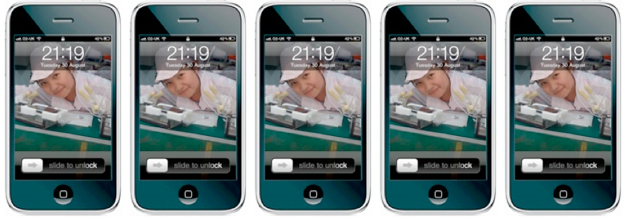
For Mike Daisey: we publish our followthethings.com ‘iPhone Girl’ page.
.
I hope she doesn’t get fired, she looks so bloody happy! I will dedicate my iPhone homescreen to her for the rest of this week (Source: vegasdodger 2008)
To mark Mike Daisey’s publication of the transcript for ‘The Agony & Ecstasy of Steve Jobs’, we are publishing a draft followthethings.com page on the ‘iPhone Girl’ phenomenon which inspired his work.
In it, we research the origins of the story in a macrumors.com posting, its travels worldwide, and the conversations that it provoked. … This is now published on site here.
See Mike Daisey talking about how the ‘iPhone Girl’ photos inspired his work in this TV interview:
Check out our other pages on how the ‘Foxconn suicides’ newspaper stories coincided with the 2010 launch of the iPad in the UK (here and here) and the spoof ‘iPhone CF’ web page and action by the YesMen et al (here). In the summer of 2012, more pages researching Apple/Foxconn cultural activism will be added to followthethings.com, including Molleindustria’s PhoneStory app (see here) and Mike Daisey’s ‘The Agony and ecstasy of Steve Jobs’ (listen here).
Craft work with followthethings.com shopping bags.
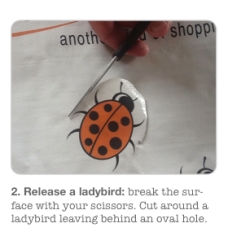
Click to download guide.
.
If you have one of our shopping bags, why not release its ladybirds, and repair your bag with an appropriate patch?
Personalise your bag!
Customise your bag!
And then show and tell us what you’ve done.
If you want to know more, you can download our short ‘make do and mend’ booklet by clicking the photo on the left.
The patch in our prototype bag is taken from an audit report of the factory in which it was made.
How could my students use followthethings.com?
We’re starting a library of followthethings.com teaching resources, lesson plans, guides, coursework, anything that the site’s users are producing to help their students to learn from the site.
A new ‘teaching resources’ page has been added (look right!).
We’ve started it off with a handout that we used this summer to organise university students’ explorations of the site at Exeter University. A shorter version was also used with 6th form students who were on campus for a ‘Discover Geography’ day.
They’re word documents, which you can download and edit for your own students.
If you have a handout that you’d like to share with other site users, please email it to us on followthethings@yahoo.com.
If you have any questions or comments about site (its Twitter feed, its facebook page and/or its shopping back flickr project) and how you and your students could best make use of it, please submit them in a comment to this post or email us at the address above.
Thanks!
 the back office